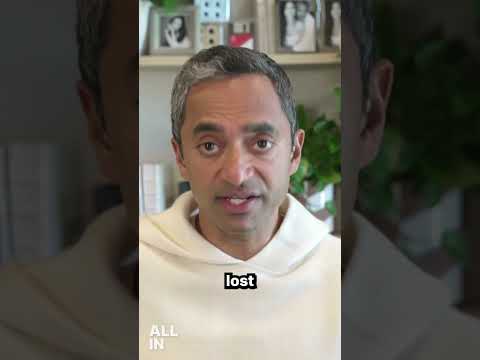
Chamath: Why Donors Should Sue the SPLC
TL;DR
- Chamath argues the Southern Poverty Law Center has become a weaponized organization that misuses its nonprofit status
- He contends that donors to organizations targeted by the SPLC should consider legal action against the organization
- Chamath discusses how the SPLC's designations have real economic consequences for businesses and individuals
- The episode explores concerns about the SPLC's lack of accountability and transparency in its methodology
- Chamath examines the tax implications and donor responsibilities when supporting controversial advocacy groups
- The discussion raises questions about nonprofit governance and the power wielded by watchdog organizations
Key Moments
Episode Recap
In this solo episode, Chamath Palihapitiya makes a provocative case that donors to organizations targeted by the Southern Poverty Law Center should seriously consider pursuing legal action against the SPLC. Chamath argues that the organization has evolved from its original civil rights mission into what he characterizes as a weaponized advocacy group that operates without sufficient accountability.
The core of Chamath's argument centers on the real-world impact of SPLC designations. When the organization labels a group as a hate group or extremist organization, it has tangible economic consequences. Banks close accounts, payment processors refuse service, and donors flee. Yet Chamath contends the SPLC's methodology for making these determinations lacks transparency and proper due process. He argues that organizations and individuals have been harmed by these designations without adequate opportunity to challenge them or understand the underlying evidence.
Chamath explores the question of donor responsibility. If wealthy individuals or institutions have given money to the SPLC, they may bear some responsibility for how that money is used. If the SPLC is making damaging accusations that lack proper substantiation, those donors could theoretically be liable. This opens up interesting questions about nonprofit governance and the fiduciary responsibilities of donors who support advocacy organizations.
The episode touches on broader concerns about the concentration of power in the nonprofit sector. The SPLC wields enormous influence over which organizations can access financial services and maintain institutional relationships, yet faces relatively little external oversight. Its ratings and designations are treated as authoritative by major institutions, giving the organization substantial gatekeeping power without corresponding accountability mechanisms.
Chamath also discusses the tax implications of supporting controversial organizations. The nonprofit tax exemption is granted to organizations serving the public interest. If an organization is abusing that status to make unsubstantiated attacks on other groups, it raises questions about whether it deserves that tax-advantaged status.
Throughout the episode, Chamath emphasizes that he is not necessarily defending the organizations the SPLC targets. Rather, he is raising concerns about process, accountability, and the appropriate use of power by large nonprofit institutions. He argues that if the SPLC has evidence that an organization is genuinely engaged in hate activities or extremism, that evidence should be public and subject to scrutiny.
The discussion reflects broader tensions in American culture around how we define extremism, who gets to make those determinations, and what recourse exists for those who disagree with those determinations. Chamath's framing positions this as a civil liberties and due process issue rather than a defense of any particular ideology. Whether listeners agree with his specific claims about the SPLC, the episode raises important questions about nonprofit accountability and institutional power.
Notable Quotes
“The SPLC has become a weaponized organization that operates without sufficient accountability to those it targets”
“When the SPLC makes a designation, it has real economic consequences for the organizations involved”
“Donors need to take responsibility for how their money is being used by the organizations they support”
“If you cannot see the evidence behind serious accusations, you should question whether those accusations are valid”
“This is ultimately a question of due process and whether large institutions should have unchecked power”