
E3: Modern Cold War, politicizing the pandemic & more with David Sacks & David Friedberg
TL;DR
- Discussion of pandemic politicization and how the virus became divided along political lines rather than being addressed purely as a public health issue
- Analysis of COVID-19 data including fatality rates and effectiveness of lockdowns, with skepticism about lockdown impacts on virus transmission
- Economic recovery outlook and concerns about stock market valuations not reflecting underlying economic conditions during the pandemic
- Examination of remote work's impact on geographic distribution of talent and potential mass migration out of San Francisco and expensive coastal cities
- Critique of government bureaucratic response to the pandemic using Tesla's Fremont factory situation as a case study of politicization
- Geopolitical analysis of the modern US-China cold war and strategies for American economic competitiveness in manufacturing and technology
Episode Recap
This episode features a panel discussion covering multiple dimensions of the pandemic and its broader societal implications. The conversation begins with personal updates from the panelists, with Sacks managing his company remotely from Mexico while others discuss adjusting to lockdown life. The discussion quickly pivots to the politicization of COVID-19, with the panelists noting how the virus response became divided along ideological lines rather than being approached as a unified public health challenge.
Sacks presents data-driven observations about the virus itself, while Friedberg discusses fatality rate statistics and expresses skepticism about lockdowns' actual effectiveness in stopping viral transmission. The panelists suggest that government responses were often driven by political considerations rather than epidemiological evidence. They debate when and how economies should reopen, with recognition that prolonged lockdowns carry their own significant costs.
A major theme involves the disconnect between stock market performance and underlying economic conditions. The panelists discuss what a genuine economic recovery might look like and express concern about asset valuations becoming detached from economic reality. They also explore the implications of continued pandemic uncertainty and potential future outbreaks.
The conversation then shifts to remote work's transformative potential, particularly regarding geographic distribution of talent. The panelists discuss how remote work could enable people to leave expensive coastal cities like San Francisco, potentially causing massive demographic shifts. Friedberg highlights the benefits of location independence for workers, while Chamath emphasizes San Francisco's vulnerability to talent exodus given its high costs and regulatory environment.
The Tesla-Fremont factory situation serves as a microcosm for broader pandemic politicization. Despite being an essential business and having strong safety protocols, Tesla faced government resistance in reopening, illustrating how public health decisions became intertwined with political ideology and bureaucratic dysfunction. The panelists suggest this ineptitude might actually serve a positive function by eroding public trust in government overreach.
The episode concludes with geopolitical analysis of the modern cold war between the United States and China. The panelists discuss how the pandemic has highlighted economic dependencies and raised questions about the US-China relationship. They explore potential policy responses, including how to penalize China for its handling of the pandemic's origins and how America might maintain competitiveness.
Friedberg emphasizes that the US could leapfrog China in manufacturing through advanced automation and modern production techniques rather than relying on cheap labor advantages. The discussion reflects concern about ideological differences between the two systems and the need for strategic thinking about long-term US competitiveness in a multipolar world.
Key Moments
Notable Quotes
“The virus became politicized from day one, with left and right taking opposite positions regardless of the evidence”
“We're seeing the beginning of a modern cold war with China that will define the next era of geopolitics”
“Remote work will enable a massive resort of talent away from expensive coastal cities”
“The Tesla situation is a perfect example of how bureaucratic ineptitude has become politicized”
“America can leapfrog China through automation and modern manufacturing techniques, not by competing on labor costs”
Related Episodes

Democrats Will SWEEP the Midterms if Trump Doesn't Do THIS

AI Is Killing Brands (And Most Companies Have No Idea)
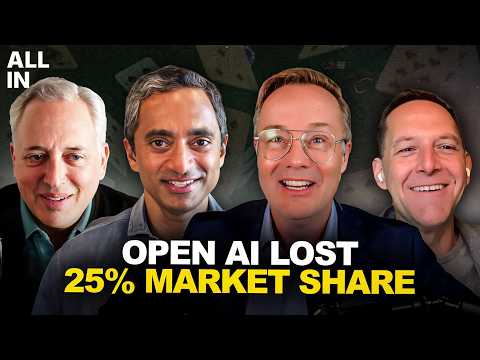
Anthropic's Generational Run, OpenAI Panics, AI Moats, Meta Loses Major Lawsuits
Anthropic is experiencing a generational run with strong momentum in the AI market, positioning itself as a formidable competitor to OpenAI