
In conversation with Vivek Ramaswamy
TL;DR
- Vivek Ramaswamy discusses his background in business and his decision to run for president, criticizing corporate ESG initiatives as political distractions
- He outlines positions on energy policy, unemployment work requirements, and immigration reform as core economic and social issues
- Ramaswamy addresses foreign policy challenges including Ukraine-Russia tensions and Taiwan-China relations, advocating for a clear strategic framework
- The conversation covers media strategy, the Silicon Valley Bank collapse, and his views on the Trump era and its impact on the Republican Party
- He details campaign strategy focused on appealing to establishment voters while discussing divisive social issues like abolishing the Department of Education and abortion
- The episode concludes with discussion of defense spending, the Military Industrial Complex, and divisions within the GOP over foreign military aid
Episode Recap
In this episode from the All-In podcast, Vivek Ramaswamy joins the besties (Chamath Palihapitiya, Jason Calacanis, David Sacks, and David Friedberg) for an in-depth conversation about his 2024 presidential campaign and policy positions. Ramaswamy begins by discussing his background as a successful entrepreneur and his founding of Strive Asset Management, which positioned him as a vocal critic of ESG initiatives in corporate America. He argues that corporations have become distracted by political and social agendas at the expense of shareholder value and genuine business performance.
The conversation moves into economic policy, where Ramaswamy discusses energy policy and his views on unemployment benefits and work requirements. He advocates for policies that encourage workforce participation while addressing America's energy independence. On immigration, he presents a framework for securing borders while managing labor market needs, framing it as essential to American economic stability.
Foreign policy emerges as a significant topic, with Ramaswamy outlining his approach to the Ukraine-Russia conflict and Taiwan-China tensions. He emphasizes the need for a clear strategic vision rather than reactive policy-making, discussing how the United States should balance its commitments and interests globally. The besties engage critically with these positions, exploring the practical implications of his foreign policy approach.
The episode addresses media strategy and current events, including commentary on the Silicon Valley Bank implosion and its broader implications for the financial system and tech industry. Ramaswamy discusses how media narratives shape political campaigns and the challenges of breaking through in a crowded information landscape.
A substantive portion of the conversation examines Trump's influence on the Republican Party and Ramaswamy's positioning relative to the former president. He discusses how Trump has reshaped Republican politics and how he sees his own campaign fitting into that context. The discussion includes campaign strategy focused on appealing to establishment Republican voters while maintaining conservative principles.
Social issues receive significant attention, with Ramaswamy discussing his positions on abolishing the Department of Education, abortion policy, and transgender rights. These are presented as part of a broader conservative framework that prioritizes limited government and individual liberty, though the besties offer counterarguments and alternative perspectives.
The conversation concludes with discussion of defense spending and the Military Industrial Complex, examining Republican divisions over continued military aid to Ukraine. Ramaswamy presents his view on how defense budgets should align with strategic interests rather than permanent institutional commitments.
Throughout the episode, the besties challenge Ramaswamy's positions with substantive pushback, creating a dynamic dialogue that goes beyond typical political interviews. The episode demonstrates the value of long-form conversation in exploring complex policy positions and their underlying rationales.
Key Moments
Notable Quotes
“ESG has become a corporate political agenda that distracts from genuine shareholder value and business performance”
“We need a clear strategic vision for America's foreign policy rather than reactive decision-making in response to geopolitical events”
“The Republican Party has been reshaped by Trump in ways that both challenge and reflect the concerns of American voters”
“Abolishing the Department of Education would restore educational decisions to states and local communities rather than federal bureaucracy”
“Defense spending should align with America's strategic interests rather than serving permanent institutional commitments to the Military Industrial Complex”
Products Mentioned
Related Episodes

Democrats Will SWEEP the Midterms if Trump Doesn't Do THIS

AI Is Killing Brands (And Most Companies Have No Idea)
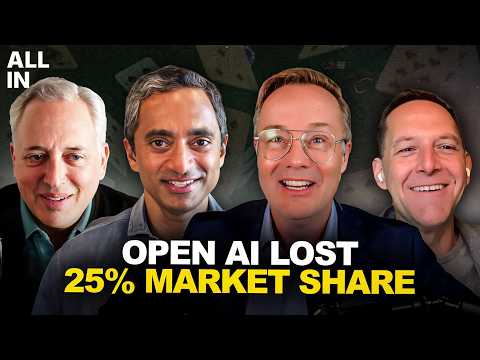
Anthropic's Generational Run, OpenAI Panics, AI Moats, Meta Loses Major Lawsuits
Anthropic is experiencing a generational run with strong momentum in the AI market, positioning itself as a formidable competitor to OpenAI